Agile Philosophy and Scrum Guide

“Clear, easy to digest, deep, and full of the author’s personal experience”
Oon Arfiandwi, CTO 7Langit
“The Scrum guide is consistent with the Scrum Guide”
Joshua Partogi, Scrum.org Trainer
Yes, I worked for Joshua Partogi in 2013-2014
Building software is hard. Technical problems can often be solved through documentation, Stack Overflow, and engineering practice. The harder problems usually involve product ownership, software design decisions, internal team performance, and the long misunderstandings that happen between people.
Scrum is one answer to that confusion, but many people meet Scrum through scattered explanations, expensive training, or debates that make it harder to know what actually matters. This book was written to remove that confusion and help software development teams work better.
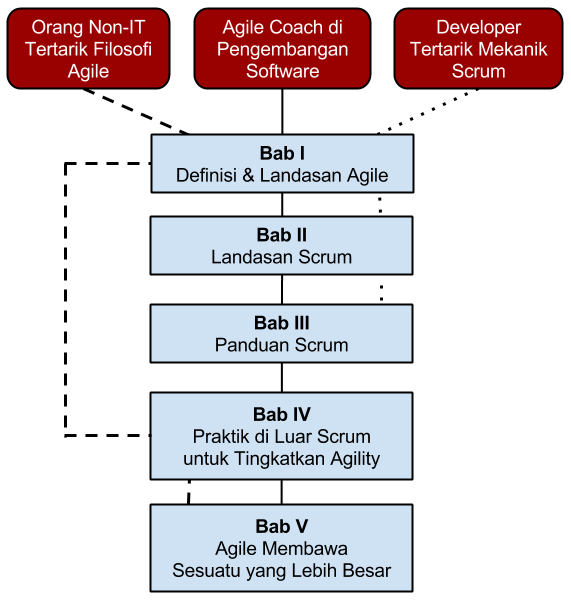
Questions This Book Answers
- Chapter I (34 pages)
- What does agile mean as an adjective?
- What are the fundamental problems in software development?
- How are those problems related to the birth of Waterfall?
- How did Waterfall eventually lose ground to agile processes?
- Who is an agile coach?
- Why does an agile coach matter for software development success?
- Why does an agile coach also matter for the whole company?
- Chapter II (22 pages)
- What are the similarities and differences between Scrum and other agile processes?
- Why is Scrum a good entry point for learning agile software development?
- Why is Scrum often misunderstood?
- Why do some technical people dislike Scrum?
- Does Scrum claim to be the final destination?
- How can you detect trainers or consultants who treat Scrum as the final goal?
- Chapter III (104 pages)
- Can Scrum be explained clearly and in detail, including every role, artifact, and event?
- Can common practices beyond the Scrum Guide also be explained?
- Are there cases where essential parts of Scrum reduce agility?
- Chapter IV (64 pages)
- Why does agility mean speed, flexibility, and endurance?
- Beyond Scrum and agile processes, what should we evaluate to improve software development agility?
- Why and how can purpose increase speed?
- Why and how can autonomy increase flexibility?
- Why and how can mastery increase endurance?
- How can money be used to improve organizational agility?
- Is there a simple way to keep finding improvements?
- Chapter V (36 pages)
- Why can agile software development expand into many areas beyond software development?
- Does that mean the agile coach domain also expands?
- What larger idea do agile processes carry?
- Is that larger idea bigger because it came first?
- Is that why an agile coach can be called a 21st-century manager?
- Bonus
- Can you tell a real story from agile coaching work?
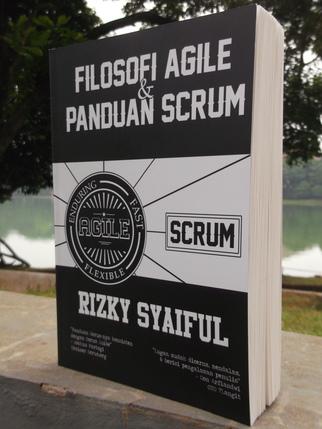
Interested? 300 pages, only Rp. 125,000.
The price is high because this is printed on demand.
Available only as a printed book. Shipping is not included.